
How to Make Goalkeeper Gloves Last Twice as Long
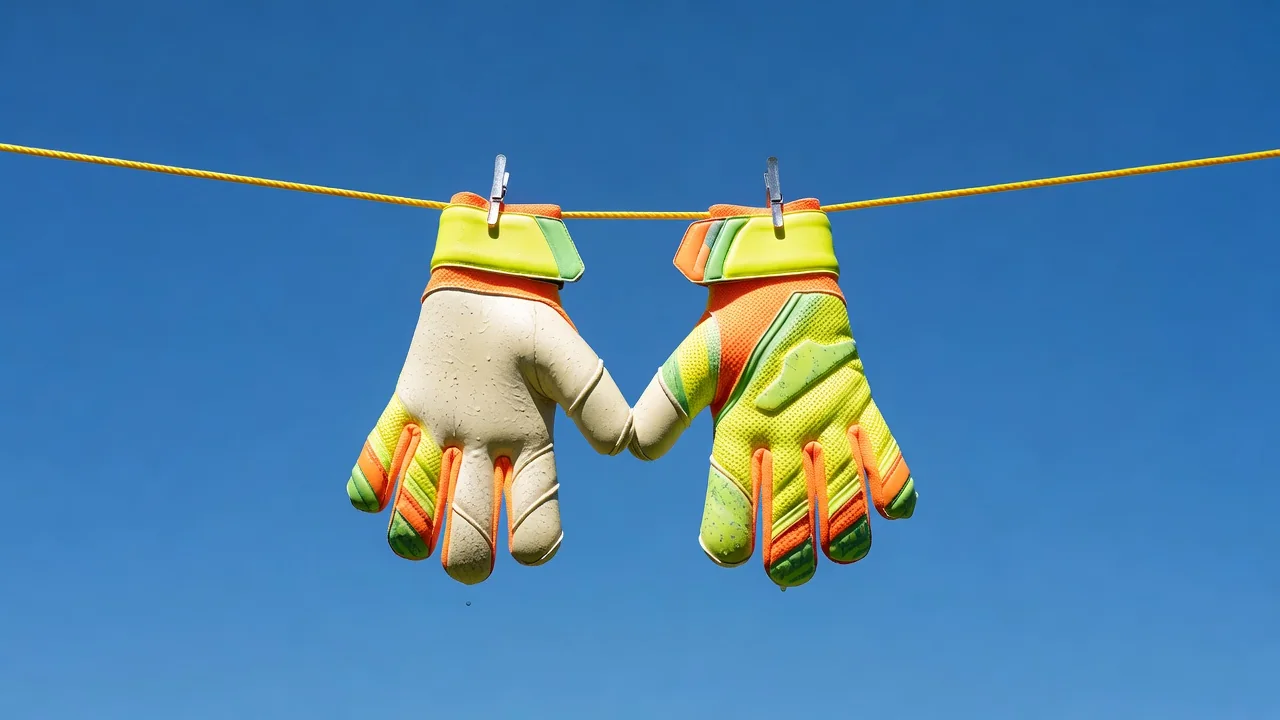
Goalkeeper gloves are consumables — the latex palm is designed to grip, not to last. But there is a difference between a pair that dies in six weeks and a pair that dies in six months, and most of that difference is owner behaviour. The keepers who get a full season from a mid-range glove are not lucky; they run a small, boring routine after every session. Here is that routine, plus the common habits that quietly shred latex.
Before the first session: the pre-wash
New gloves leave the factory with a thin production residue on the latex — a release agent from the moulding process. Play in them straight away and the grip is genuinely worse, and the surface layer that would have washed off instead gets ground into the palm. The fix takes ten minutes: a lukewarm hand wash with a tiny amount of mild soap (or dedicated glove wash), a gentle rub of the palms, a thorough rinse and an air dry. Many keepers also dampen the palms before every subsequent use — most latex grades are engineered to grip best slightly damp, which is why you see professionals pouring water on their gloves during matches.
After every session: wash, never machine
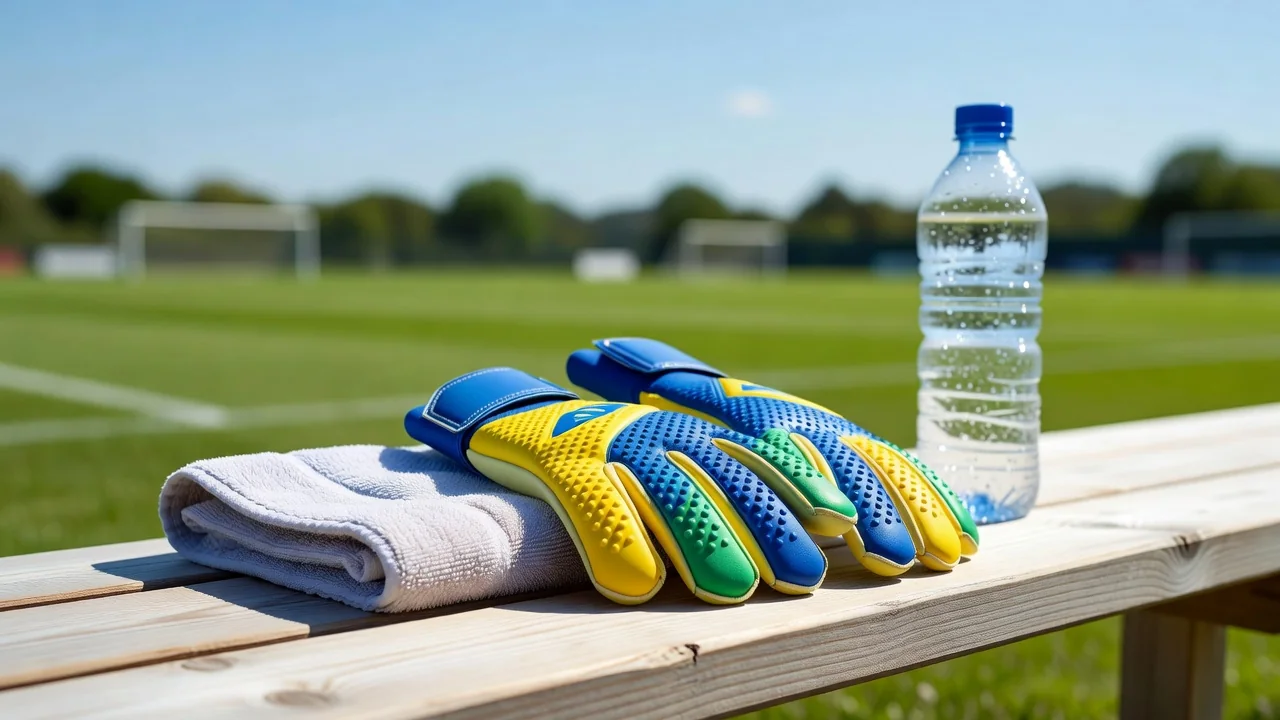
Dirt is the silent killer. Grit and 3G rubber crumb left in the palm act like sandpaper every time the latex flexes, and dried mud stiffens the foam cells until they crack. Rinse the gloves in lukewarm water after every muddy session — just water is usually enough — squeezing (never wringing) the palms until the water runs clear. The washing machine is banned: the drum's agitation tears finger seams and the spin cycle can delaminate the latex from its backing fabric. The tumble dryer, radiator and sunny windowsill are equally banned — heat is latex's mortal enemy, turning supple foam brittle in an afternoon.
Drying and storage: where gloves actually die
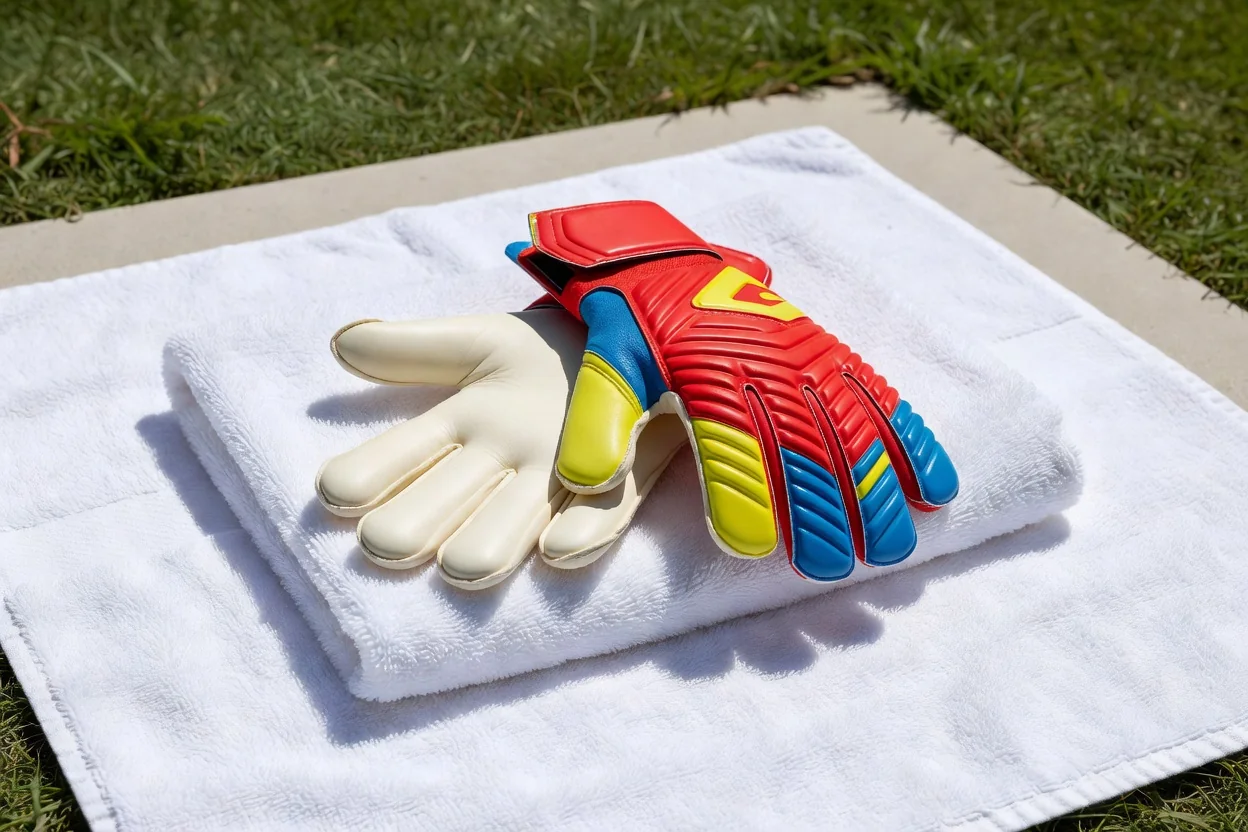
Most gloves do not wear out — they rot in bags. A damp glove sealed in a plastic kitbag develops mildew inside the foam within days, and mildewed latex loses its grip and its smell of innocence permanently. The routine: after washing, press the palms in a towel, then hang the gloves by the wrist strap or lay them palm-up somewhere ventilated, away from direct heat and sunlight. Only bag them when fully dry, ideally in a breathable mesh glove bag rather than the sealed plastic one they came in. Storing gloves palm-to-palm is fine; storing them with the palms folded hard against themselves for months can crease the latex.
- Pre-wash new gloves — factory residue kills initial grip.
- Dampen palms before play; most latex grips best slightly moist.
- Rinse after mud; squeeze, never wring; no machines, ever.
- Air dry ventilated, away from radiators, sun and tumble dryers.
- Bag only when bone dry — damp plus sealed plastic equals rot.
Habits compared: what helps and what kills
| Habit | Effect on latex | Verdict |
|---|---|---|
| Pre-washing new gloves | Removes residue, unlocks grip | Always do it |
| Dampening palms pre-match | Better grip, less dry-tearing | Recommended |
| Rinsing after muddy sessions | Stops grit abrasion | Essential |
| Radiator / tumble drying | Brittle, cracked foam | Kills gloves in days |
| Machine washing | Torn seams, delamination | Never |
| Bagging damp gloves | Mildew, permanent stink | The number one killer |
Palms up on the pitch too
Care extends to how you play: pushing yourself up off the ground with a closed fist rather than an open palm saves the latex heel from thousands of micro-scratches, and keepers who wipe their palms on their shorts between plays are sanding them against dried mud. Use the water bottle and towel at your post instead — that is what they are there for. None of this makes gloves immortal, but it reliably doubles their life, which is the same as halving your yearly glove bill.
Related reviews
Goalkeeper Glove Cuts Explained: Flat, Roll, Negative
The cut decides how the palm wraps the ball and how the glove fits your hand. Flat, roll finger, negative and hybrid — what each feels like in play.
2026-08-28
Goalkeeper Glove Latex: Grip, Durability, Weather
Soft latex grips and dies young; hard latex survives and slips in the wet. How to read palm grades and match them to your pitches and budget.
2026-08-21
What Goalkeeper Kit Needs That Outfield Kit Does Not
Padding, abrasion panels, long sleeves and trousers that slide. Why a keeper’s shirt is a different garment and what to check before buying one.
2026-08-14