
The Goalkeeper Equipment Checklist Beyond Gloves
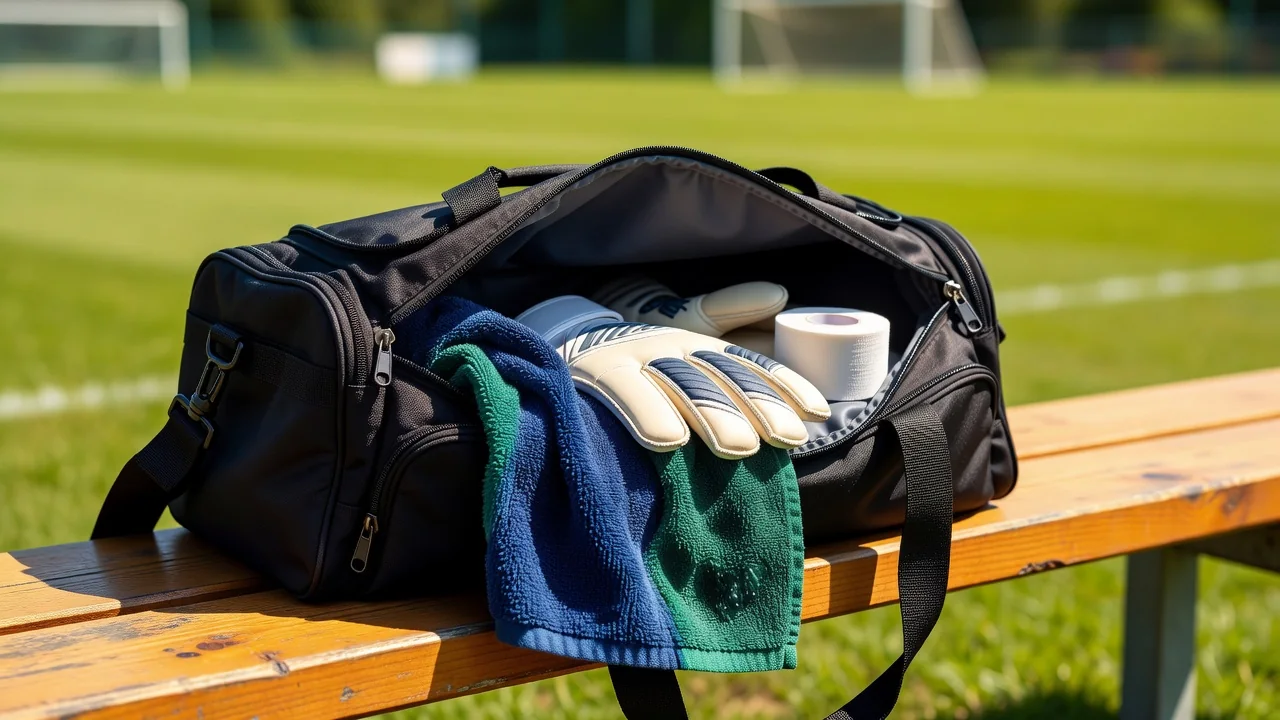
Gloves get all the attention and all the budget. Then winter arrives, and the keepers who last until March are the ones whose kitbag contains the unglamorous supporting cast: the towel, the tape, the spare pair, the layers. This is the checklist of everything beyond gloves that separates a prepared goalkeeper from one doing star jumps at a frozen kick-off hoping the game gets cancelled.
The essentials nobody photographs
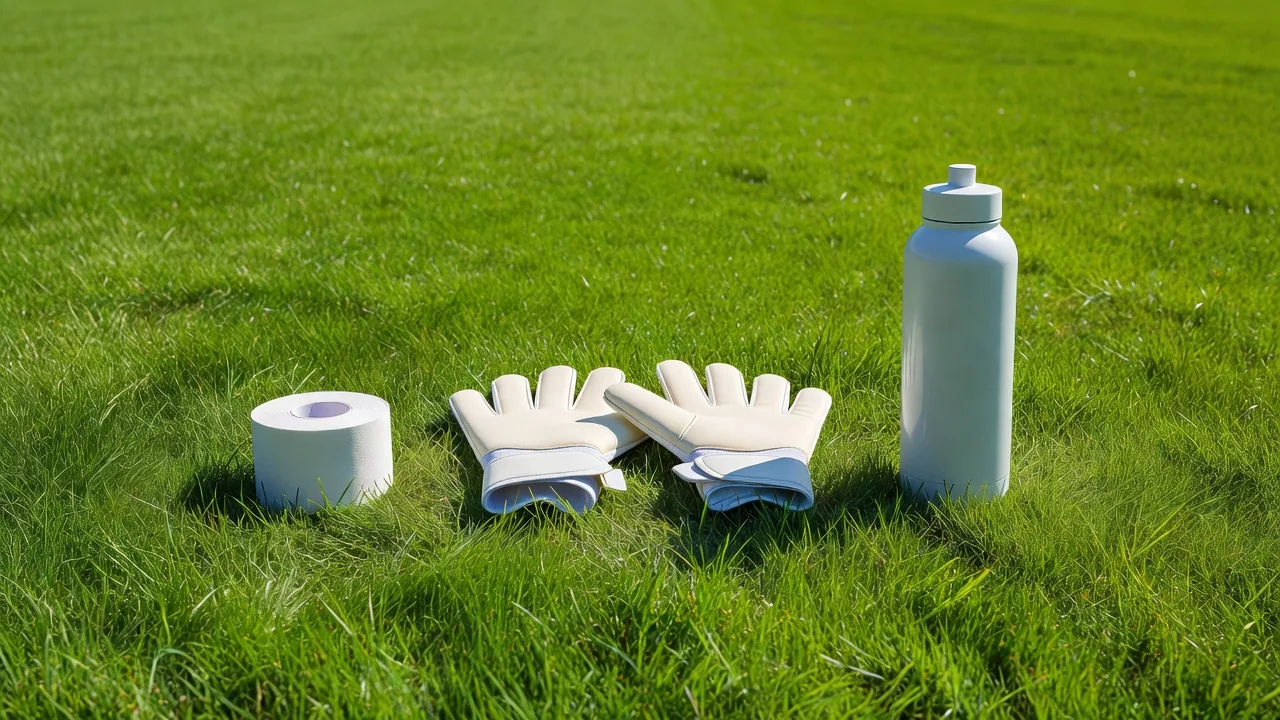
First, the towel. A small hand towel clipped to the goal net or draped over the post is standard goalkeeping infrastructure: wet gloves get wiped, not rubbed on muddy shorts, and a muddy ball gets a quick clean before a goal kick. Second, water — a full bottle at the post serves double duty for drinking and dampening palms, and on 3G pitches a second bottle for rinsing a mud-caked ball is not paranoia. Third, tape: a roll of white athletic or sock tape fixes shin pads that slip, secures sock tops, patches a splitting wrist strap mid-match and marks your water bottle. It weighs nothing and solves a dozen small emergencies.
Spares and layers
A spare pair of gloves is the most important non-glove item on this list. Latex tears, wrist straps snap, and a keepers' union of one means nobody is lending you theirs mid-match. The spare does not need to match the first pair — a retired training glove is perfect insurance. Below the gloves, base layers matter more for keepers than for any other position: you spend long stretches motionless, generating no heat, then must explode into a dive. A thermal long-sleeve base layer under the keeper shirt from October onwards is not softness; it is the difference between warm, responsive shoulders and a frozen torso that flinches at a swerving shot. Padded three-quarter pants or trousers, as covered in our kit guide, complete the lower half.
- Small towel at the goal — glove and ball hygiene all match.
- Two water bottles in winter: one for you, one for the ball and palms.
- Athletic tape — shin pads, socks, emergency strap repairs.
- Spare gloves, even a retired pair — latex fails without warning.
- Thermal base layers — a motionless keeper is a cold keeper.
- Studs appropriate to the pitch — keepers slip most at the worst moments.
The checklist at a glance
| Item | Job | Priority | Notes |
|---|---|---|---|
| Towel | Wipe gloves and ball | Essential | Clip to the net or post |
| Water bottle ×2 | Drink + dampen palms | Essential | Second bottle for 3G mud |
| Athletic tape | Repairs and retention | Essential | One roll lasts a season |
| Spare gloves | Tear insurance | High | Retired pair is fine |
| Base layers | Warmth while standing | High (winter) | Thermal top first, legs second |
| Ball bag / pump | Warm-up balls | Medium | Often shared with the team |
The bag itself
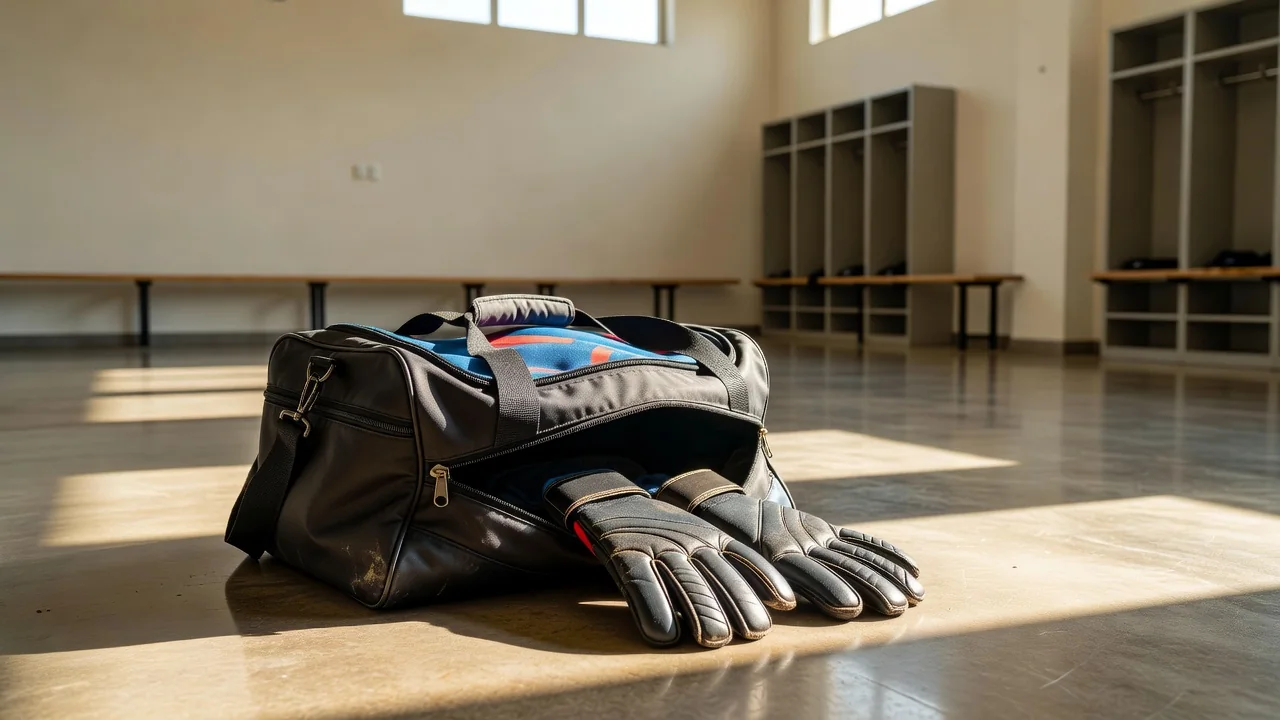
Last, the container: a bag with a ventilated compartment — or at minimum a mesh glove bag inside it — keeps damp gloves from rotting between sessions, and a separate pocket keeps tape, studs and small items findable. Goalkeeper gloves stored loose under muddy boots emerge flattened and contaminated. Pack the night before, check the two-bottle rule, and you will never again be the keeper borrowing tape from the opposition bench while your gloves stiffen in the cold.
Related reviews
Goalkeeper Glove Cuts Explained: Flat, Roll, Negative
The cut decides how the palm wraps the ball and how the glove fits your hand. Flat, roll finger, negative and hybrid — what each feels like in play.
2026-08-28
Goalkeeper Glove Latex: Grip, Durability, Weather
Soft latex grips and dies young; hard latex survives and slips in the wet. How to read palm grades and match them to your pitches and budget.
2026-08-21
What Goalkeeper Kit Needs That Outfield Kit Does Not
Padding, abrasion panels, long sleeves and trousers that slide. Why a keeper’s shirt is a different garment and what to check before buying one.
2026-08-14