
Football Sizes 3, 4 and 5: Which Ball for Which Age
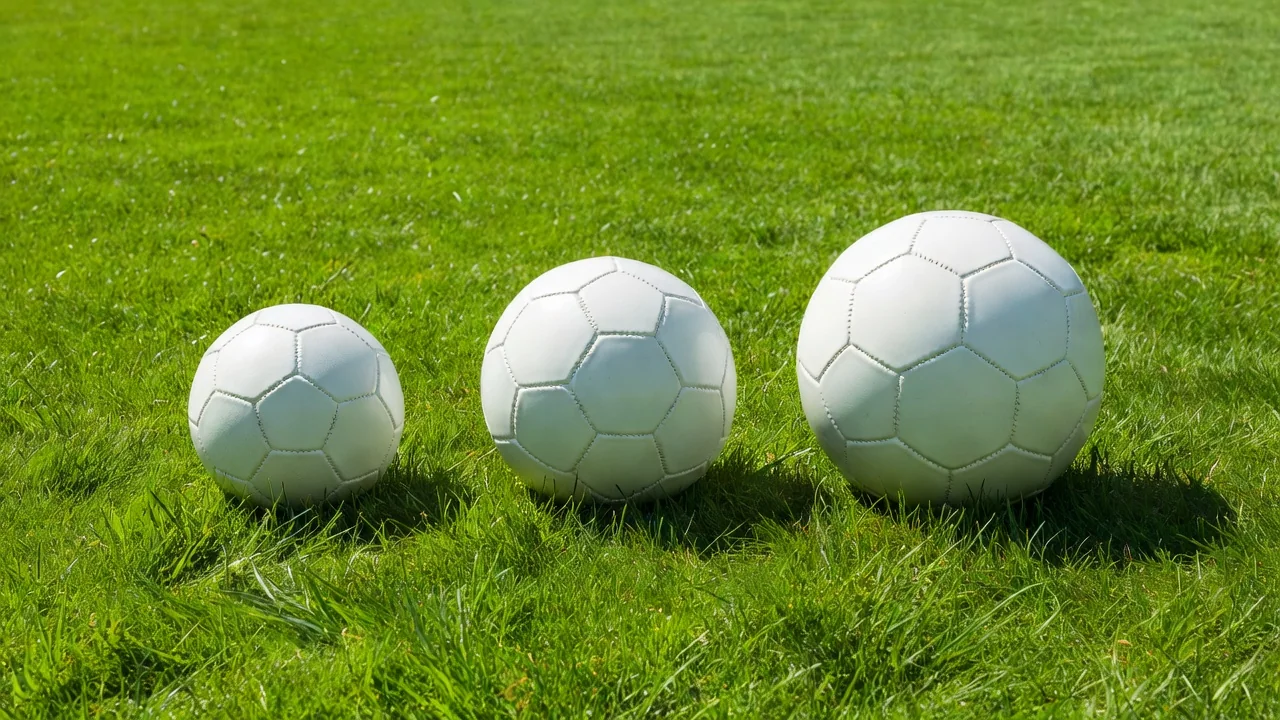
Watch a nine-year-old struggle to control a full-size match ball and you are watching bad equipment, not bad technique. Football's ball sizes exist because a ball that is proportionally too big changes how a child strikes, traps and heads — and not for the better. The sizing ladder is short (three real steps), the numbers behind it are precise, and yet clubs, schools and parents get it wrong constantly, usually by buying "a proper ball" too early.
The ladder: 3, 4, 5
Size 3 is the junior ball: roughly 58 to 60 centimetres in circumference and around 300 to 320 grams. It is the correct ball for the youngest age groups — up to about eight years old — where feet are small, legs are short and a lighter ball lets a child learn to strike through the middle of the ball instead of hacking at something that outweighs their technique.
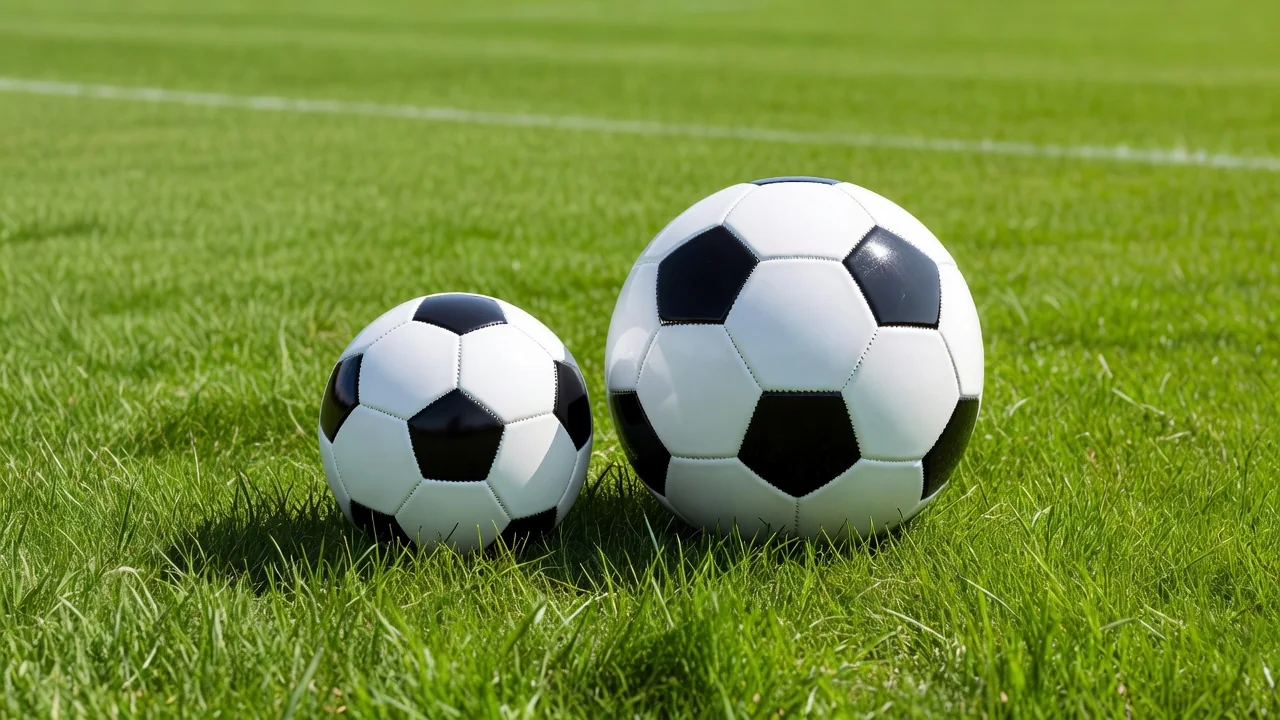
Size 4 is the bridge: 63.5 to 66 centimetres, around 350 to 390 grams. It serves the roughly eight-to-twelve window, and it is also the regulation size for futsal (in a low-bounce variant) — which is why so many technically gifted players grew up on a size 4: futsal's small, heavyish ball demands clean contact on every touch. Size 5 is the adult standard: 68 to 70 centimetres, 410 to 450 grams at the start of a match per the Laws of the Game, pressurised to 0.6–1.1 atmospheres. From the early teens upward, every competitive match is played with it.
Why the right size actually matters
The case for correct sizing is biomechanical, not sentimental. A ball's weight relative to a child's leg strength determines whether striking technique develops cleanly. With an oversized, overweight ball, children compensate: they toe-poke (the only way to move a heavy ball with a small foot), they lean back to lift it (grooving a slice), and they avoid heading entirely (sensible — heading a waterlogged adult ball is genuinely unpleasant for a child, and many youth programmes restrict heading in the youngest groups anyway).
Coaches who work in academies describe the same progression: children on correctly sized balls develop instep striking and first-touch control earlier, because the equipment rewards proper technique instead of punishing it. The wrong ball does not just slow learning — it teaches habits that have to be unlearned later.
- Under 8s: size 3 — light enough to strike properly, small enough to control.
- Ages 8–12: size 4 — the bridge years, and the futsal standard.
- 13 and up: size 5 — the adult match ball, full weight and pressure.
- Indoor/futsal at any age: the futsal variant of the size, with its low-bounce bladder.
Sizes by the numbers
| Size | Circumference | Weight | Age band | Notes |
|---|---|---|---|---|
| 3 | 58–60 cm | ~300–320 g | Up to ~8 | First organised football |
| 4 | 63.5–66 cm | ~350–390 g | ~8–12 | Also futsal regulation size |
| 5 | 68–70 cm | 410–450 g | 13+ | Adult match standard, 0.6–1.1 atm |
Buying the right ball, not the big ball
The practical traps are three. First, "junior" balls sold without a size mark — check for the printed size and weight by the valve, because an unmarked ball is a lottery. Second, buying size 5 "to grow into": children do not grow into equipment during the season it handicaps them, they just play worse in it. Third, ignoring bounce for indoor use — a size 4 outdoor ball in a sports hall bounces like a space hopper; futsal variants exist precisely because the bladder is built to kill rebound.
One sane approach for families: own the correctly sized training ball for the garden, and let the club supply the match balls. The ball your child trains with ten times a week shapes them far more than the one they see for ninety minutes on Sunday.
Related reviews
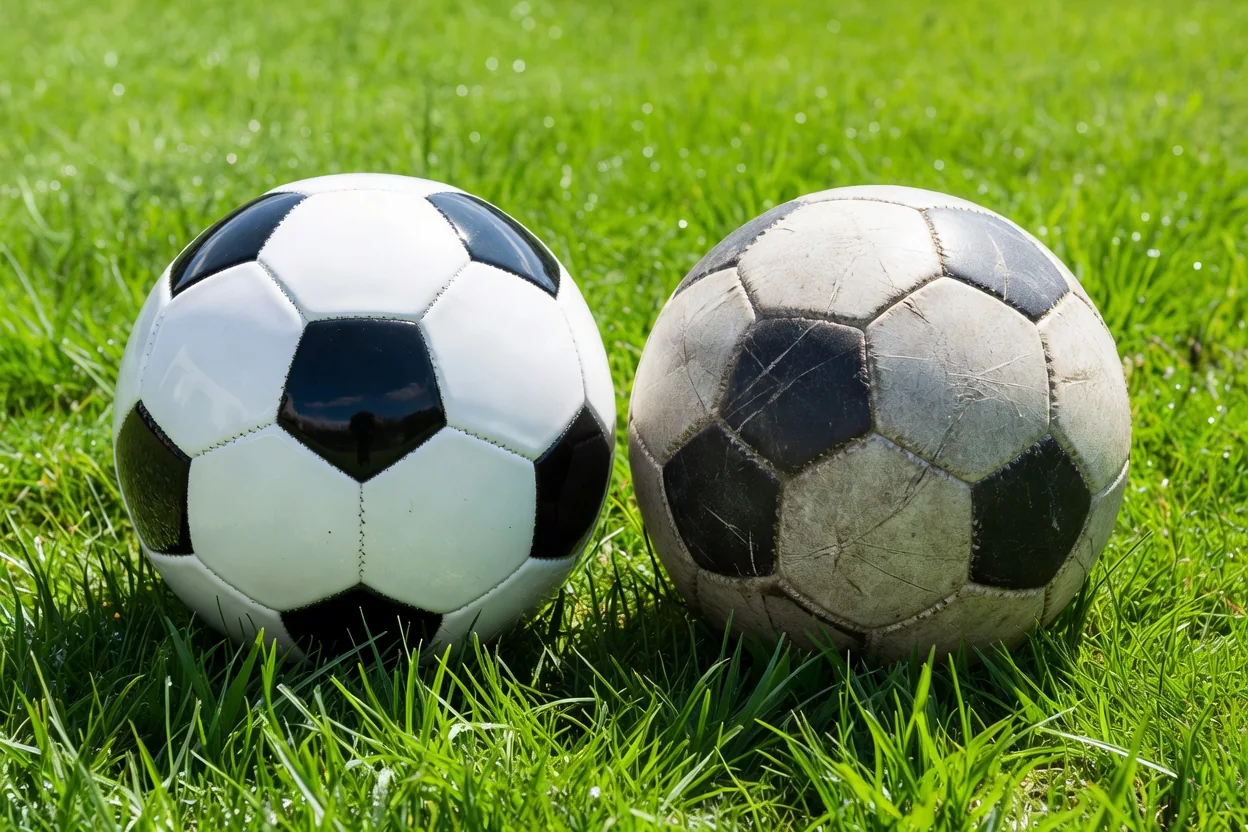
Match Ball vs Training Ball: What You Actually Get
One ball is built for ninety televised minutes, the other for a season of wet Tuesdays. Construction, feel and lifespan — where the price gap goes.
2026-08-30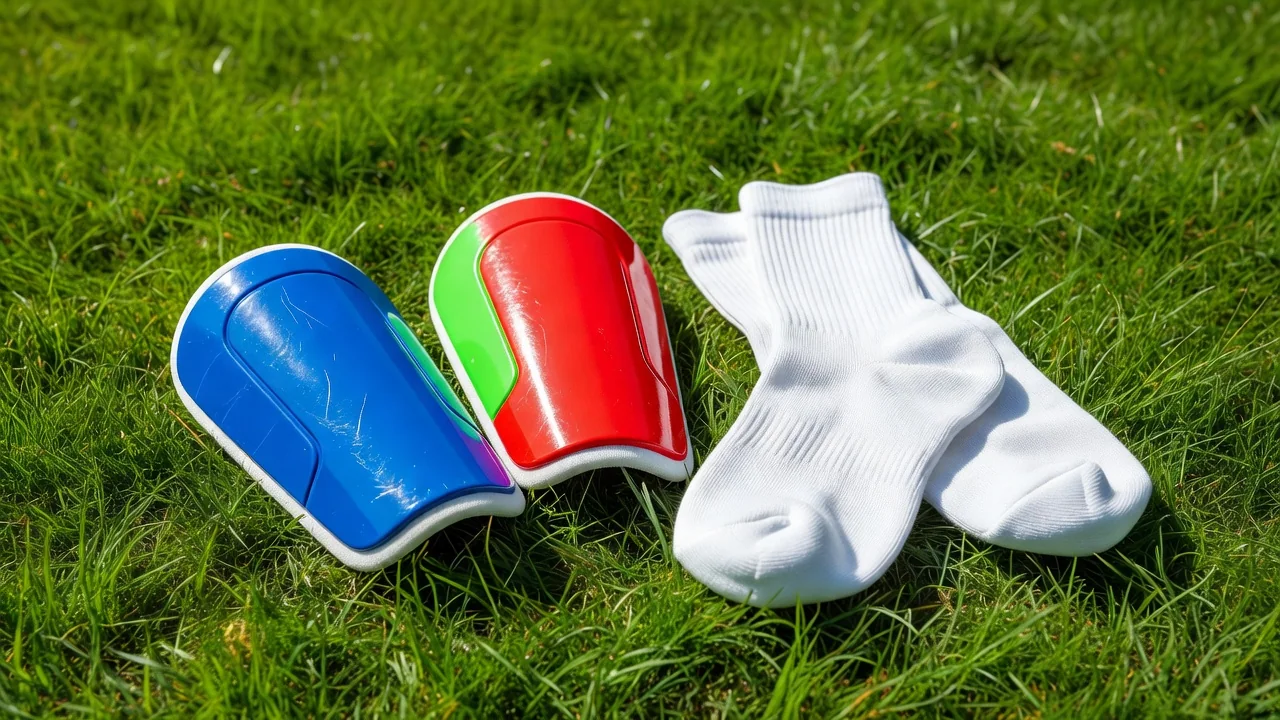
How to Choose Shin Pads That Actually Protect You
Slip-in, strapped and sock-style guards behave differently in a tackle. Coverage, fit and the ankle question — what to look for before you buy.
2026-08-17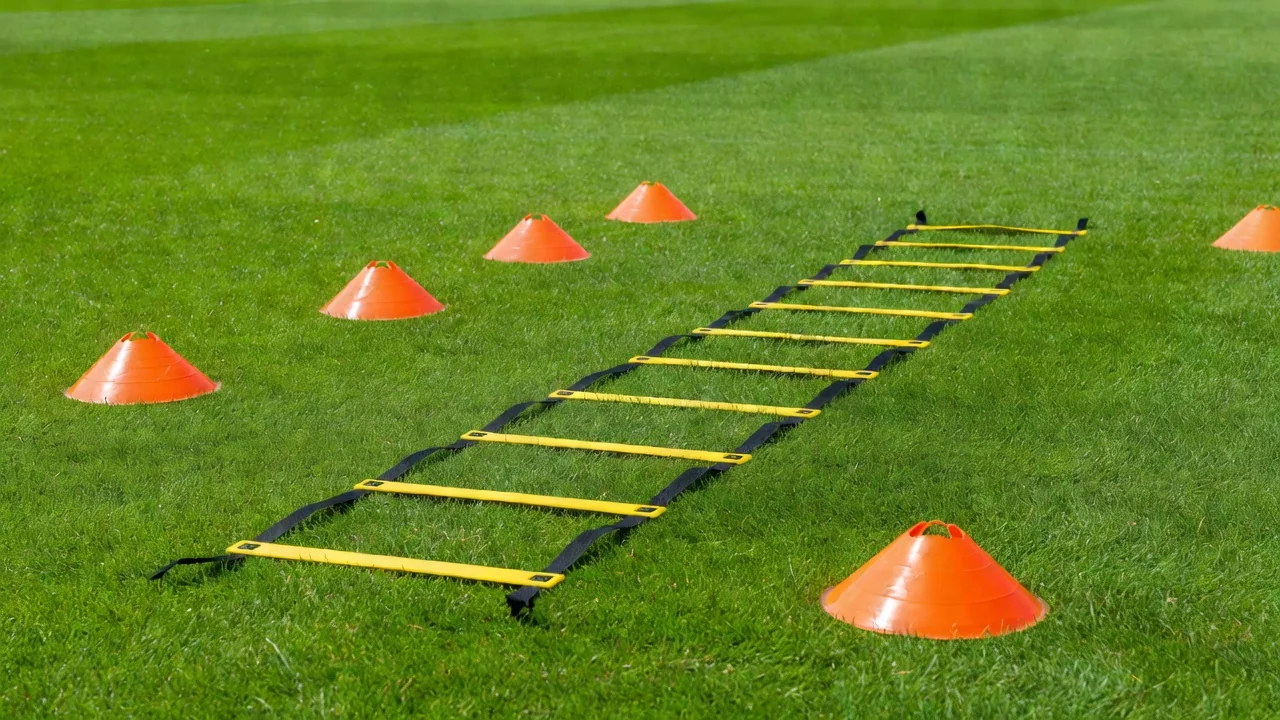
Five Pieces of Home Training Equipment Worth Buying
Cones, a ladder, a rebounder, a ball you trust and a pump. The short list of training kit that survives a season — and the gadgets that do not.
2026-08-13